.png)
Every Touchpoint Is a Conversation. Are Yours Actually Connected?
56% of customers are forced to repeat themselves every time they switch channels. The problem isn't your technology, it's that your touchpoints have no shared memory. This is the gap between multichannel and truly omnichannel CX, and what it actually takes to close it.
The biggest failure in modern customer experience isn’t speed.
It isn’t personalization.
It isn’t even AI.
It’s amnesia.
Enterprises have built dozens of touchpoints, but no shared memory between them. And customers are paying the price.
Let’s take a case, where a customer spends 20 minutes on your website, picks the perfect product, adds it to their cart, and then has a quick question. They open your chat widget. No agent is available, so they call your helpline.
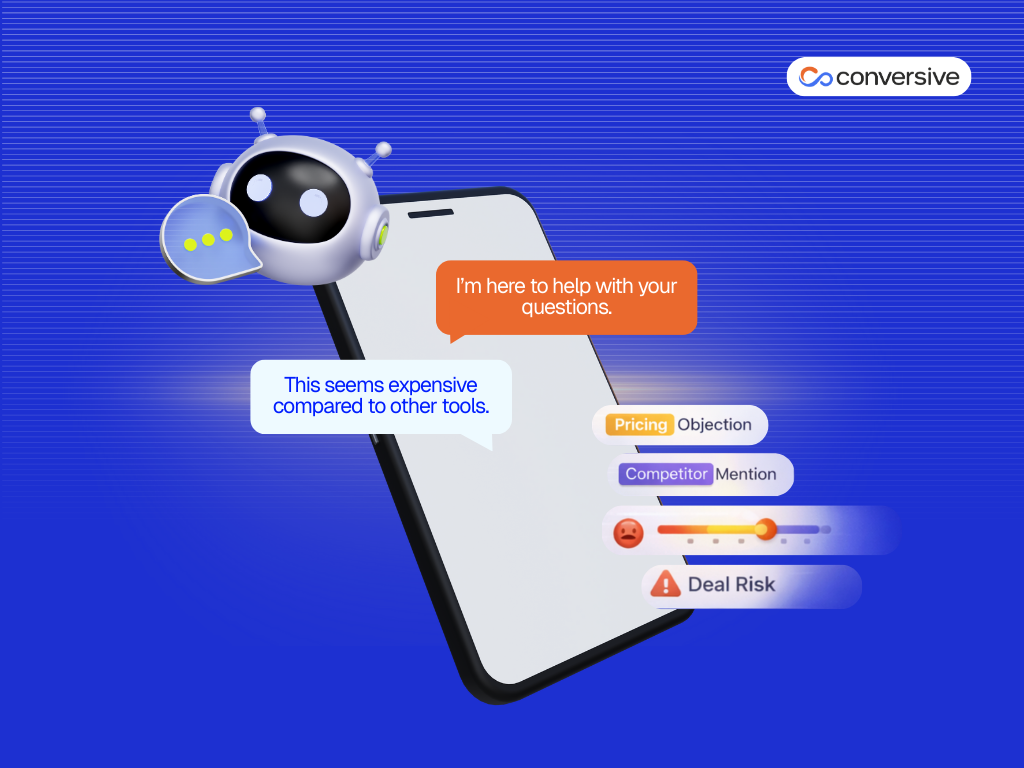
The agent who picks up has no idea about the website visit. Therefore, no idea about the cart. Obviously, the customer explains everything from scratch… again.
This isn't a hypothetical. This is the reality inside most enterprises.
56% of customers report having to repeat themselves because of disconnected support channels. More than half and that’s not a glitch in the system, it's the absence of the four things every conversation depends on: memory, context, coherence, continuity.
Why do companies keep designing customer experience in channels when customers experience it as a single journey?
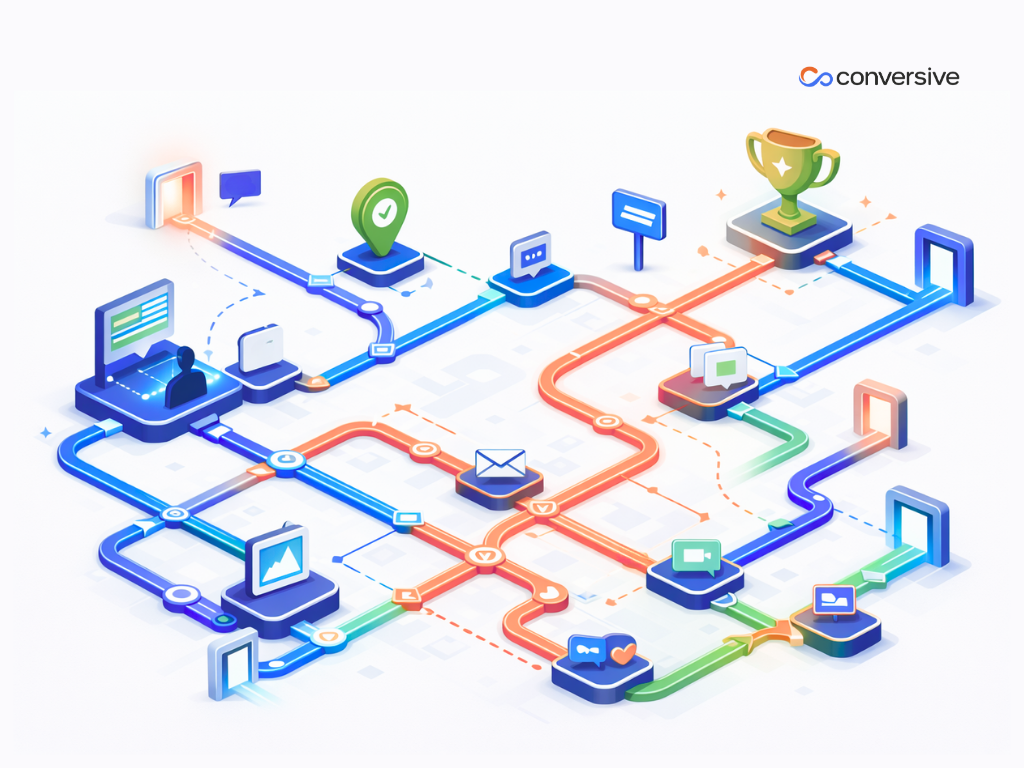
Most businesses treat channels as separate pipes, when customers experience them as one single river. And the moment that river hits a dam, a broken handoff, a lost thread, a blank-slate agent, trust erodes fast.
This article is your map for understanding:
- Why connected touchpoints go beyond surface-level CX enhancements
- Explains how they serve as the backbone of modern businesses
- Emphasizes their role in enabling businesses to grow alongside their customers
The Illusion of Omnichannel
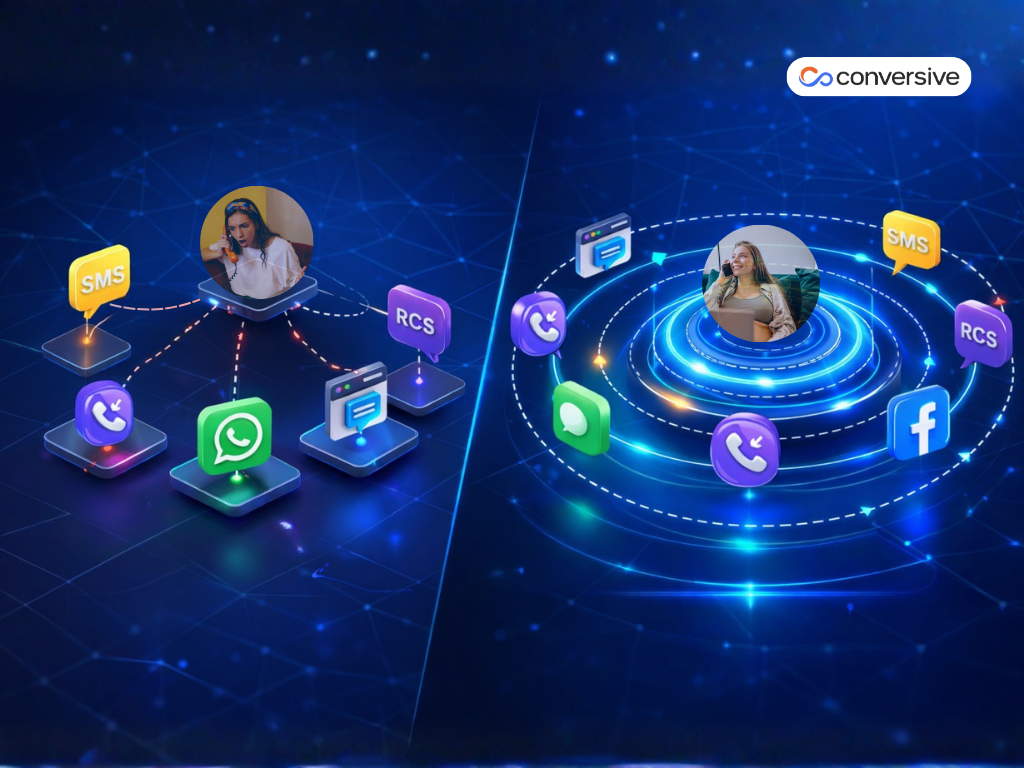
Let's get something out of the way early. There's a critical difference between being multichannel and being truly omnichannel, and most organizations are confusing the two. Multichannel means your brand exists across:
- Chat
- Voice
- Social
- Maybe even WhatsApp
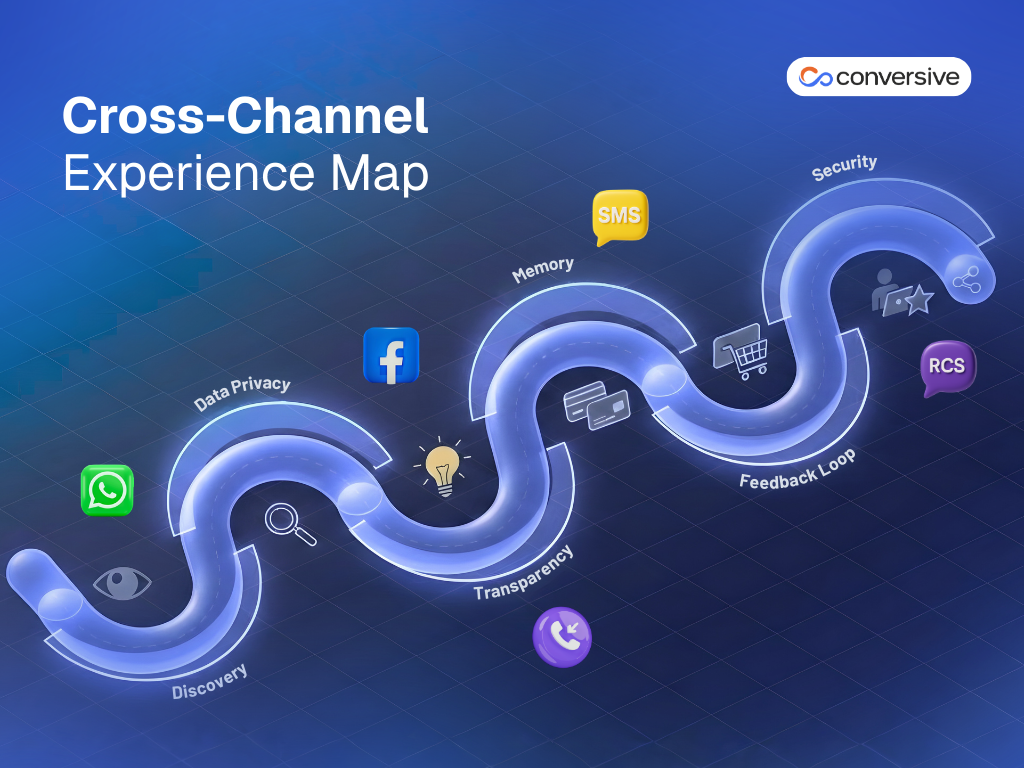
Omnichannel means those channels actually talk to each other. The data flows and the context travels. And so, the customer doesn't have to start over.
Omnichannel service boosts customer satisfaction scores to 67%, compared to just 28% for multichannel alone. That's not a marginal difference. That's the gap between a customer who recommends you and one who quietly churns.
There’s an interesting analogy that I often use in the context, let’s say you’re having a conversation with someone who, every time you walked into a new room, forgot everything you'd just told them. You'd stop sharing anything meaningful, right? That's exactly how customers feel when they switch channels and are treated like strangers.
Research confirms that customers think in terms of journeys, and not channels, which makes the disconnect feel even more jarring to them.
Businesses invest in platforms and label them “omnichannel” without integrating them across functions or embedding them into end-to-end journeys. 89% of consumers get frustrated when they have to repeat their issue to multiple agents, while 61% will consider leaving after a single poor experience.
The concept of omnichannel sounds compelling in executive presentations and marketing decks, but in practice most implementations don’t deliver seamless customer experiences, thus creating the illusion of omnichannel rather than the real thing.
Five Structural Gaps That Fracture the Customer Journey
So why does this keep happening, even in organizations with the best intentions and significant technology budgets?
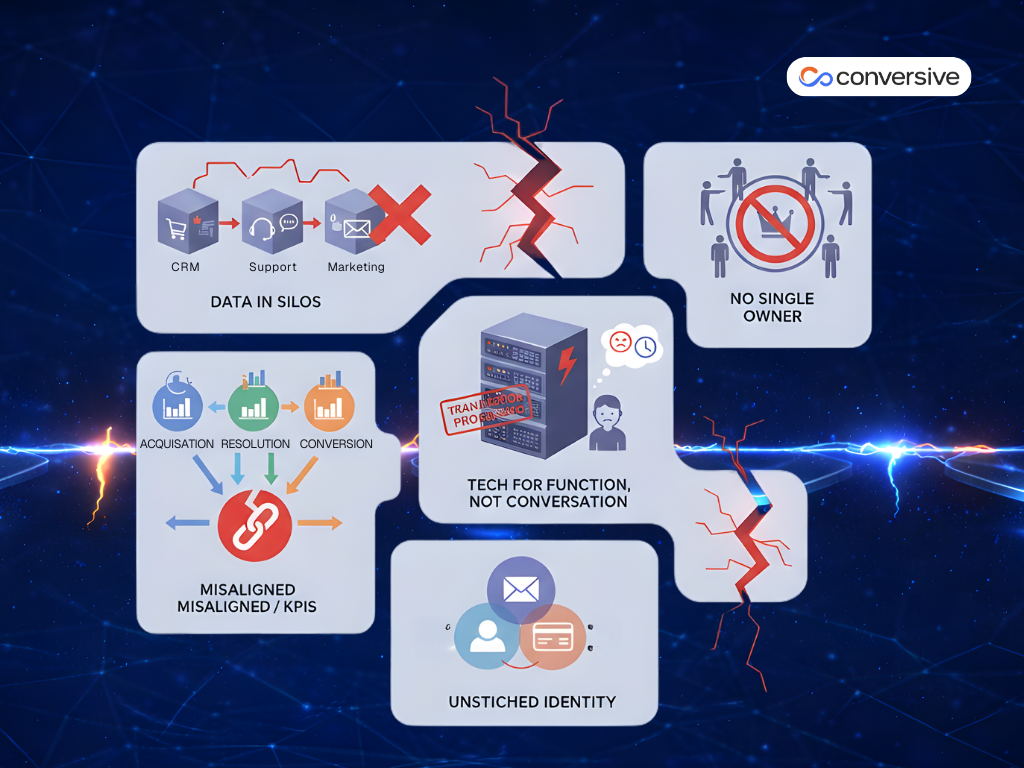
It comes down to five structural gaps that quietly undermine every touchpoint strategy.
1. Data lives in silos, not systems
Your CRM knows about purchases. Your support platform knows about tickets. Your marketing automation tool knows about email opens. But do they speak to each other in real time?
For most enterprises, the answer is “sometimes, partially, with a lot of manual effort”.
Only 13% of businesses fully carry customer context across channels. Thirteen percent. That means 87% of organizations are asking their customers to do the memory work for them.
2. Channels are owned by different teams with different KPIs
Marketing measures acquisition. Support measures resolution time. Sales measures conversion. Nobody is measured on the continuity of the experience and what isn't measured isn't fixed.
When every team optimizes for their own channel in isolation, the seams between channels become the customer's problem. This is precisely why modern businesses are being forced to move beyond single-channel customer thinking, the organizational structure has to evolve alongside the technology.
3. Technology stacks were built for function, not for conversation
Legacy platforms were designed to process transactions, not facilitate dialogue. They record what happened but rarely understand what it meant in the context of the broader relationship.
A customer who called frustrated, waited 12 minutes, and still didn't resolve their issue, that pattern should trigger something. In most systems, it's just a closed ticket. Omnichannel analytics exists precisely to surface these cross-channel patterns, but most organizations haven't yet invested in reading them.
Understanding these gaps isn't about assigning blame, it’s about knowing exactly where to intervene.
4. No single owner of the customer journey
This is subtly different from the KPI point. The KPI problem is about what's measured. This is about who's accountable. If there's no clear person in charge of the whole process or journey, then fixing problems between different parts or channels turns into a fight about who should take blame or make decisions, instead of fixing the actual issues quickly and effectively.
5. Customer identity isn't stitched across systems
The same person shows up as an email address in your marketing tool, a phone number in your CRM, and a loyalty ID in your e-commerce platform. These are three different “people” to your technology stack, even though they're one human with one continuous relationship with your brand. Without identity resolution at the data layer, even a technically “connected” system is still flying half-blind.
What Connected Touchpoints Actually Look Like
I want to be specific here, because vague aspirations don't build better systems. A connected touchpoint strategy has three non-negotiable characteristics.
I) Contextual continuity
When a customer moves from self-service to live chat to voice, the context moves with them. The agent sees the journey, what was searched, what was clicked, what failed to resolve. They don't ask “how can I help you today?” as if the last 20 minutes didn't happen. They say “I can see you were looking at your recent order, let me pick up from there”.
McKinsey's research on moving from touchpoints to journeys makes it clear:
companies that optimize for the full journey, not just individual interactions, consistently outperform on every key CX metric.
II) Intent recognition across channels
A customer who clicks an email link about an upgrade offer and then visits your pricing page within 10 minutes is telling you something. Connected systems recognize that signal and route the next interaction accordingly, whether that's a proactive chat message, a personalized push notification, or a priority queue when they call.
The data on omnichannel marketing shows that brands using behavioral signals across channels consistently drive higher conversion and deeper engagement than those operating on single-channel logic alone.
III) Memory that compounds
Every interaction adds to a shared, growing understanding of who the customer is and what they need. Not just their account details but also their preferences, their communication style, their history of patience and frustration. This is what transforms a transactional relationship into one that actually feels human.
Businesses with robust omnichannel engagement see revenue grow up to 3.5x faster than those without. Organizations with strong omnichannel strategies retain ~89% of their customers, versus only 33% retention for those with weak channel integration. These numbers are the direct output of customers who feel understood and valued across every single touchpoint.
Automation Is Table Stakes. Orchestration Is the Advantage.
Most AI deployments in CX today are still point solutions. A chatbot here. A recommendation engine there. A sentiment analysis tool bolted onto the side of a support platform. These are useful, but they're not transformative.
The real promise of AI in a connected touchpoint strategy isn't automation. It's orchestration, the ability to understand the full arc of a customer journey and make intelligent decisions about what should happen next, across every channel, in real time.
34% of businesses now actively use AI across all customer interaction processes, and 52% of business decision-makers prioritize AI specifically to improve the efficiency of customer support. These numbers are growing fast, but efficiency alone isn't the ceiling. The ceiling is relationship intelligence.
Consider a high-value customer who hasn’t logged in for 30 days after submitting a complaint.
Efficiency AI resolves the complaint faster. Relationship intelligence correlates the complaint, inactivity, and purchase history, and proactively offers retention outreach before churn happens.
That’s the difference between service optimization and lifecycle management.
The Ethics of Connected Conversations
I’d be doing this topic a disservice if I didn’t spend real time here. AI is a double-edged sword, especially when the same data connectivity that makes experiences feel seamless and intuitive can just as easily make them feel invasive and unsettling.
Knowing a customer clicked on a pricing page twice this week is useful context. Using that to aggressively push a sales call before they've indicated readiness? That's where personalization tips into surveillance.
There are three ethical questions every organization building connected touchpoints needs to answer before moving forward.
I) Do customers know their journey is being tracked?
Transparency isn't just a compliance checkbox, it's the foundation of trust. Customers who understand how their data is used, and who genuinely benefit from that use, are far more comfortable sharing it. Those who feel watched without context or consent are not.
II) Is the data being used to serve the customer or to serve the business?
These aren't always the same thing. A connected experience that surfaces a relevant offer at the right moment serves both. A connected experience that uses emotional distress signals to push a premium plan serves only one. Know the difference, and draw the line clearly.
III) Who owns the customer's story?
As AI systems grow more sophisticated, they're building increasingly rich profiles of individual customers. Who controls that narrative? What happens when it's wrong? Governance frameworks for AI-generated customer profiles are still nascent in most enterprises, and this is a gap that will matter enormously as regulators catch up with reality.
The long-term solution isn't to pull back from connectivity, it's to build connectivity on a foundation of genuine value exchange. Customers will share more context when they trust it will be used to genuinely improve their experience.
A Framework for Building Connected Touchpoints
Let me give you something you can actually work with. When I think about what it takes to genuinely connect every touchpoint into a coherent conversation, I think about it in (following) four layers.
This isn't a one-time implementation. It's a continuous operating model. Integrated tools cut wait times by 39% and lower service costs by up to 30% but only when teams are actively learning from what the connected system surfaces. The organizations that treat it as such are the ones that compound their CX advantage over time.
Move from Fragmented Touchpoints to Conversive Continuity
Every conversation your brand has is either building something or breaking something. Trust, loyalty, advocacy or confusion, frustration, churn.
Most businesses are having conversations in parallel that should be happening in sequence. They're generating noise when they could be building narrative. And the customers can feel it, even when they can't articulate it. They just quietly decide that switching is easier than explaining themselves one more time.
The shift from disconnected touchpoints to a genuinely connected conversational experience is not a technology project. It's a strategic commitment to treating every customer interaction as a chapter in an ongoing story.
The businesses that make that shift don't just improve their metrics. They change the nature of their relationship with their customers entirely.
So you have to decide:
When your customer travels from your website to your chatbot to your contact center, is the story still intact? Or are you asking them to start over?
Because the brands that can honestly answer “the story is still intact”, those are the ones customers don't leave.
If you're building toward that kind of experience, we'd love to show you what it looks like in practice. → Book a Demo with Conversive, today!
Frequently Asked Questions
1. What is an omnichannel customer experience?
Omnichannel customer experience connects every touchpoint, website, chatbot, contact center, email, and social, into one continuous journey where context and history move with the customer.
2. Why do customers have to repeat themselves across support channels?
Customers repeat themselves when systems don’t share memory in real time. Disconnected CRM, chat, and voice platforms create fragmented experiences that break continuity.
3. What’s the difference between multichannel and omnichannel support?
Multichannel means being present on multiple platforms. Omnichannel means those platforms share data, context, and identity, so the customer doesn’t have to start over.
4. How does AI improve connected customer journeys?
AI enables intent recognition, predictive routing, and real-time orchestration across channels, turning isolated interactions into a cohesive, continuous conversation.
5. What are connected touchpoints in customer experience?
Connected touchpoints are integrated systems where behavioral, transactional, and conversational data flow together, creating continuity across every stage of the customer journey.
6. How does Conversive unify customer conversations across channels?
Conversive creates a shared memory layer across website, chatbot, CRM, and contact center platforms, ensuring seamless handoffs, contextual continuity, and intelligent journey orchestration.
7. How can I see Conversive in action?
You can book a personalized demo with Conversive to see how connected conversations reduce churn, improve retention, and transform fragmented touchpoints into one coherent experience.


.png)

Explore More