.png)
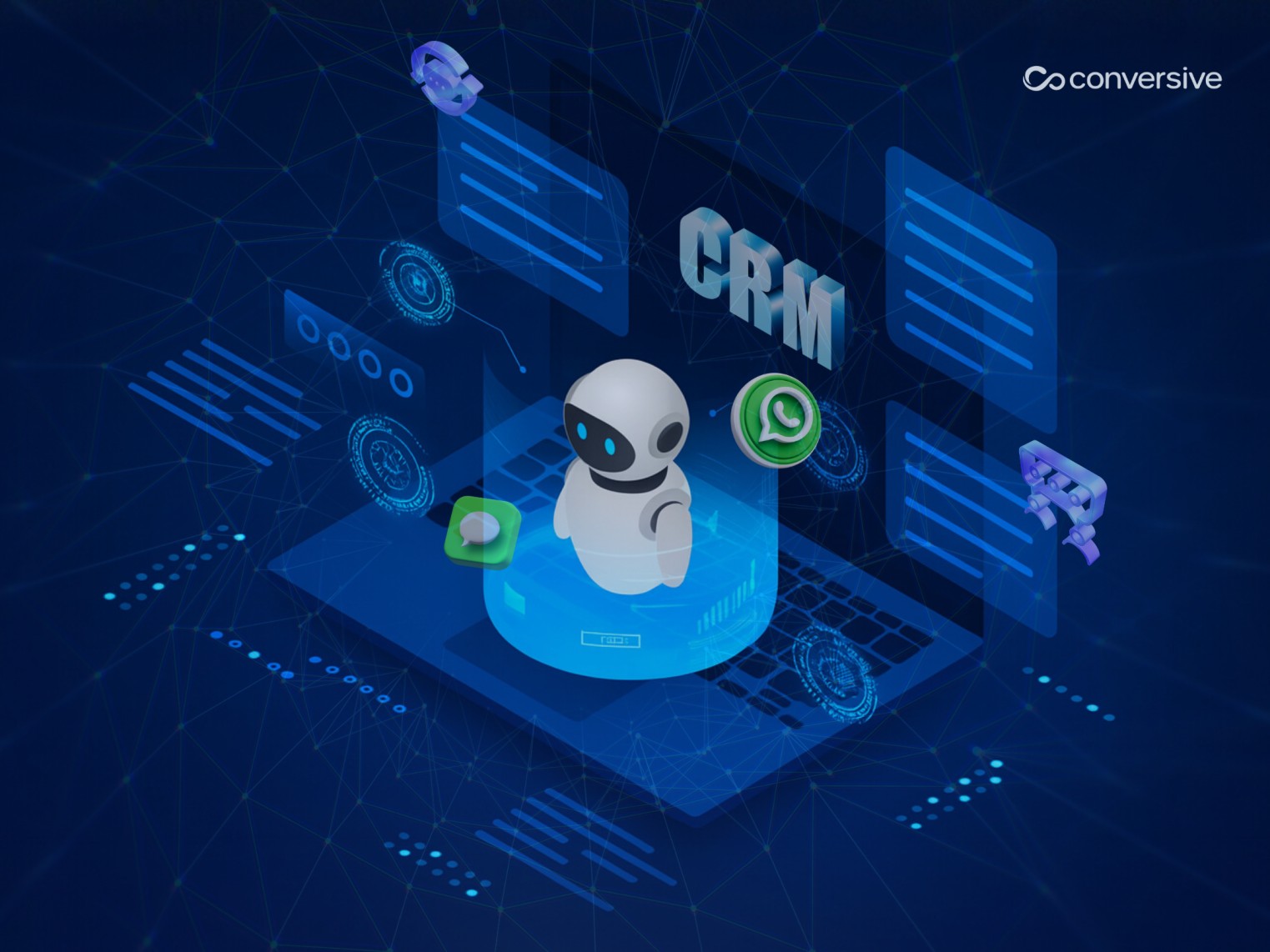
What is a CRM AI Agent?
Discover how CRM AI agents use real-time data and automation to deliver hyperpersonalized sales outreach across channels directly from your CRM.
Modern sales teams are under increasing pressure to do more with less. They need to personalize every interaction, respond faster, and convert smarter without growing headcount.
CRM AI Agents solve this problem up to a great extent.
These intelligent, autonomous software layers live directly inside CRMs like Salesforce or Zoho, helping businesses scale personalization without sacrificing the human nuance that actually drives conversions.
Unlike conventional chatbots or linear automation tools, CRM AI agents combine deep CRM integration, large language models (LLMs), and decision engines to act across the sales lifecycle. They proactively coordinate tasks, analyze buyer behavior, and engage leads with timely, contextual messages. From first touch to deal close, these agents help organizations deliver a sales experience that feels one-to-one, even when it’s one-to-many.
This article breaks down how CRM AI agents work, how they hyperpersonalize conversations at scale, especially in high-touch, regulated industries.
So, let’s get started:-
What are CRM AI Agents?
CRM AI agents are intelligent, autonomous entities that operate within CRMs like Salesforce or Zoho to automate and personalize sales interactions. They go far beyond simple automation by using real-time data, natural language understanding, and decision-making frameworks to act like a digital sales assistant that never sleeps and always operates in context.
These agents ingest signals from CRM records, web activity, messaging threads, and external tools, then determine what action to take next.
- Should a follow-up be sent?
- Is a deal going cold?
- Does a stakeholder need a personalized message?
The agent decides and acts using reasoning models, pre-built workflows, and real-time data.
At their core, CRM AI agents are built on three layers:
Layer 1: Understanding - Using large language models (LLMs), the agent can parse call notes, email threads, or user behavior to understand context and intent.
Layer 2 : Decisioning - AI-powered models assess what action to take whether to send a message, update a deal stage, or notify a rep.
Layer 3: Execution - The agent performs the task across channels (SMS, WhatsApp, voice, email) and logs every step back into the CRM.
And because the agent lives natively inside your CRM, it always works with the most up-to-date, compliance-ready data.
Core Functions of a CRM AI Agent
CRM AI agents are designed to perform high-leverage tasks that traditionally require manual effort, coordination, and judgment. These agents integrate deeply with CRM systems, external data sources, and communication platforms allowing them to take action with precision and personalization.
Below are the core tasks they commonly handle:
i) Lead Research and Enrichment
Agents automatically pull data from sources like LinkedIn, Clearbit, or company websites to fill in missing fields such as job title, industry, or tech stack directly into the CRM.
ii) First-Touch and Follow-Up Messaging
They initiate outreach or follow up with leads using dynamic templates that adjust based on recipient behavior, timing, and persona.
iii) CRM Updates and Task Creation
AI agents log interactions, create follow-up tasks, update deal stages, or assign records to human reps keeping data clean and actionable.
iv) Opportunity Monitoring and Engagement
Agents track email opens, link clicks, form submissions, and engagement patterns, triggering timely nudges or handoffs when needed.
v) Cross-Channel Orchestration
From WhatsApp to SMS to email, agents select the most effective channel for each message and ensure compliance based on geography and consent status.
These agents don't operate in isolation. They work by constantly interpreting internal CRM data (like lead scores, engagement logs, or sales stages) and external signals (like event registrations, inbound emails, or call outcomes).
How CRM AI Agents Enable Hyperpersonalization at Scale
With access to everything from email replies and web sessions to firmographic details and previous conversations, the agent can determine the right message, the best time to send it, and the optimal channel without much human involvement.
Rather than relying on static segments or predefined cadences, CRM AI agents tailor every interaction in real time. Here’s how they hyperpersonalize customer conversations at scale:-
1. They Merge Behavioral and CRM Data to Build Live Buyer Profiles
These agents continuously ingest both structured and unstructured data. Structured inputs include CRM fields like job title, company size, or deal stage. Unstructured signals span web behavior, email engagement, call transcripts, support tickets, and even social interactions. Together, these insights form a dynamic, moment-to-moment understanding of each buyer’s context and intent.
With this unified view, the agent can identify who’s sales-ready, who needs nurturing, and what topics or concerns matter most to each stakeholder.
2. Agents Predict Next Best Actions with Decision Models
Beyond simply understanding a buyer, AI agents can predict what to do next. Using real-time scoring and behavioral trends, they determine the ideal next move whether that’s a reminder via WhatsApp, a personalized email, or a follow-up scheduled for a specific time.
The result is a sales motion that feels timely and relevant to the buyer.
3. They Customize Content Dynamically for Each Buyer
Instead of sending the same email to every lead in a sequence, CRM AI agents dynamically generate content based on each buyer’s profile and behavior. Whether it’s drafting an industry-specific email, surfacing talking points for a sales call, or adjusting tone and length based on persona, every message is tuned for resonance.
This shifts the sales experience from templated to tailored without adding manual work for reps.
4. AI Agents Continuously Learn from Results
Agents aren’t just set-and-forget tools. They learn from performance data over time by tracking open rates, reply rates, conversions, and more. Based on what works, they adapt future messages, adjust timing strategies, and even test different content variants automatically.
This feedback loop helps organizations refine their outreach without the burden of manual A/B testing or campaign adjustments.
How CRM AI Agents Personalize Each Stage of the Funnel
CRM AI agents hyperpersonalize every stage of the buyer journey, from lead capture to retention. Here’s how agents adapt to each phase, using context to drive better outcomes:-
1. Top of Funnel: Smarter Lead Qualification and First Touches
AI agents can automatically enrich new leads with contextual data from sources like LinkedIn or Clearbit, populating missing fields in the CRM. From there, they draft first-touch messages tailored to industry trends, company news, or tech stack making cold outreach feel warm and timely.
For example, if a prospect recently announced a funding round or posted a job opening, the agent can weave that into the email, positioning the outreach as helpful rather than generic.
2. Mid Funnel: Intelligent Follow-Ups and Opportunity Management
As leads engage, CRM AI agents monitor activity and update records in real time adjusting deal stages or creating tasks as needed. If a stakeholder goes silent, the agent can trigger a personalized re-engagement based on past objections or interests logged in call notes or email threads.
These follow-ups feel thoughtful because they’re grounded in actual behavior and conversation history.
3. Post-Sale: Retention and Expansion Signals
Once a customer is onboarded, the agent continues monitoring for post-sale signals. This includes product usage patterns, support ticket volume, and customer satisfaction scores. If engagement drops or a potential upsell opportunity appears (e.g., new user added to the account), the agent nudges a Customer Success Manager (CSM) or sends a tailored message directly.
Across the funnel, CRM AI agents act like attentive teammates. They spot opportunities, reduce delays, and deliver the right message at the right moment.
How Conversive Helps You Deploy CRM AI Agents Fast
Conversive makes it simple to implement CRM AI agents, even in high-stakes industries like healthcare, education, or financial services. Built to work inside your CRM, Conversive enables fast deployment, secure compliance, and deep personalization from day one.
i) No-Code Agent Builder for CRM Integration
Conversive provides a drag-and-drop builder that lets teams launch AI agents without writing code. Pre-built modules connect directly to Salesforce, Zoho, and other CRMs, enabling agents to read CRM fields, trigger workflows, and update records in real time.
Whether you're nurturing leads or triaging support inquiries, you can create intelligent flows that match your existing CRM logic. No developer required.
ii) Automate Lead Qualification and Personalize Every Touchpoint
Using CRM data and user behavior, Conversive agents personalize every interaction. For instance, a follow-up SMS might change tone and timing depending on the lead’s response rate, seniority, or past interactions. Agents can also qualify leads by asking intelligent questions, scoring responses, and routing the most promising ones to human reps.
This kind of intelligent triage and contextual messaging helps teams respond faster and with more relevance.
iii) Built for Regulated, High-Stakes Industries
Conversive is designed with compliance at its core. It includes built-in support for HIPAA, GDPR, TCPA, and 10DLC regulations. It comes with opt-in management, audit trails, and sender ID controls. This makes it ideal for industries where trust, privacy, and traceability are non-negotiable.
From patient reminders to legal case updates to financial disclosures, Conversive enables compliant, high-quality conversations across every stage of the customer journey.
How to Choose the Right CRM AI Agent?
If you're considering adding a CRM AI agent to your sales stack, the right choice isn’t necessarily the one with the longest feature list. Always pick an agent that fits your data, your workflows, and your compliance needs.
Here’s what to look for as you evaluate options:
1. Look for CRM-Native Functionality
Agents that live directly inside your CRM, rather than operating as third-party add-ons are better positioned to take real-time action and maintain data integrity. Native functionality enables agents to act on record changes instantly, embed into existing workflows, and stay within your security perimeter.
2. Check for Multi-Channel Consistency
It’s not enough to support multiple channels. Look for systems that maintain context across them. For example, if a conversation starts over email and continues via WhatsApp, the agent should preserve the thread’s history and relevance. This reduces repetition and keeps buyer experiences coherent, especially in long sales cycles.
3. Don’t Skip the Compliance Details
Consent tracking, audit logs, and channel-specific rules are essential particularly if you're in a regulated industry. Ask how the platform handles opt-ins, sender ID registration (e.g., 10DLC), or reply windows (e.g., WhatsApp’s 24-hour policy). Compliance isn’t just about avoiding penalties; it’s about maintaining trust at scale.
If you're evaluating platforms and need a more grounded conversation, especially for regulated, high-touch use cases, we should talk. Book a demo with Conversive for a tailored walkthrough and see how our AI agents handle your use-case.
Frequently Asked Questions
What is the difference between a CRM AI Agent and a chatbot?
A chatbot typically handles predefined questions using scripts or rule-based flows. A CRM AI agent, by contrast, operates with autonomy. It reads CRM records, reasons through decisions, and takes multi-step actions like researching leads, crafting messages, and updating deal stages without necessarily needing a human to manually trigger each step.
Can CRM AI Agents replace sales reps?
No. CRM AI agents are designed to support, not replace, sales teams. They handle repetitive, time-sensitive tasks (like follow-ups, research, and reminders) so reps can focus on high-value conversations. Think of them as digital teammates that free up human reps to build relationships and close deals.
Do I need technical skills to set up a CRM AI Agent?
Not necessarily. Conversive offers no-code builders and pre-configured modules that let you create workflows, define triggers, and connect to your CRM without writing any code. This makes AI agents accessible even for non-technical teams.
How do CRM AI Agents stay compliant with regulations like GDPR or HIPAA?
Compliance is baked into leading platforms through consent management tools, audit logs, opt-in/out handling, and secure data handling practices. Conversive, for instance, includes TCPA, GDPR, HIPAA, and 10DLC compliance controls as part of its native infrastructure.
What CRMs can integrate with AI agents like Conversive?
Conversive is a CRM-native AI agent which integrates with platforms like Salesforce and Zoho. Its deep CRM integration ensures real-time data access, contextual actions, and compliance which are key requirements for AI agents operating in regulated or high-touch industries.


.png)

Explore More

%20(4).avif)

